Blog Post

For decades, global supply chains have relied on foreign‑dominated maritime networks, but the Trump administration says the United States is preparing a major shift to rebalance that system.
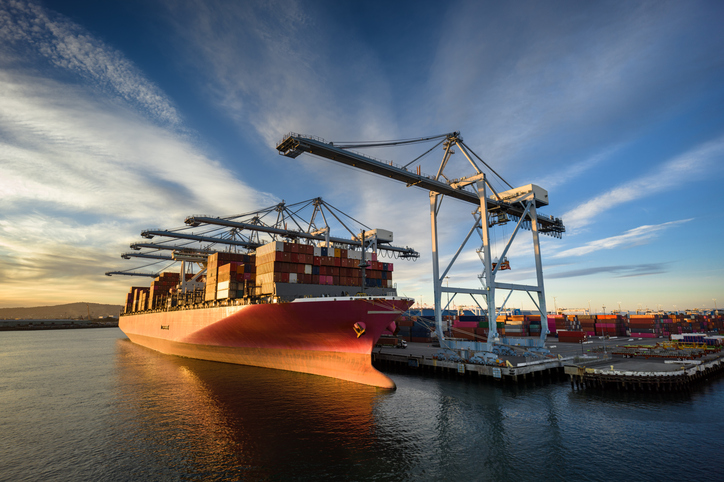
For decades, the backbone of global supply chains has been a maritime system dominated by foreign shipyards, foreign-flagged vessels, and sourcing that often runs through geopolitical chokepoints. But the Trump administration believes that will not be the case for long. The United States is preparing for a major step toward rebalancing.
The White House’s new strategy to “Restore America’s Maritime Dominance” signals the most ambitious effort in a generation to strengthen the nation’s maritime capabilities. It spans shipbuilding, port modernization, and workforce development, and promises new funding mechanisms to support long-term resilience across the supply chain. And while the plan is broad in scope, its implications for retailers are both practical and far-reaching.
The United States currently builds less than 1 percent of the world's commercial ships, while some foreign competitors, chief among them China, produce thousands, according to federal data cited in the plan. This imbalance has shaped not only global trade flows but also the reliability and flexibility of the supply chains American retailers rely on every day.
The new Maritime Action Plan proposes “hundreds of billions” in investment to expand U.S. shipyard capacity and increase the number of U.S.-built and U.S.-flagged vessels operating in commercial trade. The need for an investment that large also signals the scale of the challenge: Modernizing a sector that has, for decades, lagged behind the speed of global commerce and the pace of foreign industrial investment. For decades, the United States has faced a mix of challenges, including limited public and private investment in shipyard modernization, higher domestic production costs, and a shrinking maritime workforce, all of which have slowed the sector’s ability to keep pace with global competitors.
The plan includes several major components that could reshape the logistics ecosystem:
These tools reflect an effort to create consistent, dedicated funding streams to support U.S. infrastructure, an issue that has challenged policymakers for years, but also foretell increased supply chain costs for U.S. businesses, and ultimately, consumers.
The Maritime Action Plan also aligns closely with ongoing legislative efforts. In April 2025, Senator Mark Kelly (D Ariz.) and a bipartisan group of colleagues reintroduced the SHIPS for America Act — one of the most ambitious maritime proposals in recent years — which focuses on rebuilding U.S. shipbuilding capacity, expanding the U.S.-flag fleet, and establishing more consistent federal oversight and funding.
The scale of the challenge is stark. About 80 U.S.-flagged vessels operate in international commerce today, compared to over 5,500 Chinese-flagged vessels. The SHIPS Act seeks to help close this gap and restore a more competitive U.S. maritime presence.
For retailers, this alignment between Congress and the administration signals that maritime revitalization is becoming a long-term, sustained national priority rather than a one-off initiative.
The maritime sector rarely finds itself at the center of national policy discussions, but this moment is different. The White House plan and its alignment with the bipartisan SHIPS Act reflect a growing belief among policymakers and industry stakeholders that a resilient maritime foundation is essential for economic competitiveness and national supply chain security.
However, turning a domestic maritime industry that has atrophied over decades into a modern, competitive system will require sustained investment, long-term coordination, and difficult policy choices. Progress is possible, but it will not be fast, frictionless, or guaranteed.
For retailers, the changes won’t happen overnight, and not all of them will be positive in the near term.
New fees, infrastructure overhauls, and regulatory changes may increase costs or introduce transitional challenges even as policymakers aim for long-term benefits. As these initiatives develop, RILA will continue to monitor federal actions, engage directly with policymakers, and keep members informed so our industry can anticipate impacts, identify risks, and have a voice in shaping the path forward.