
Blog Post

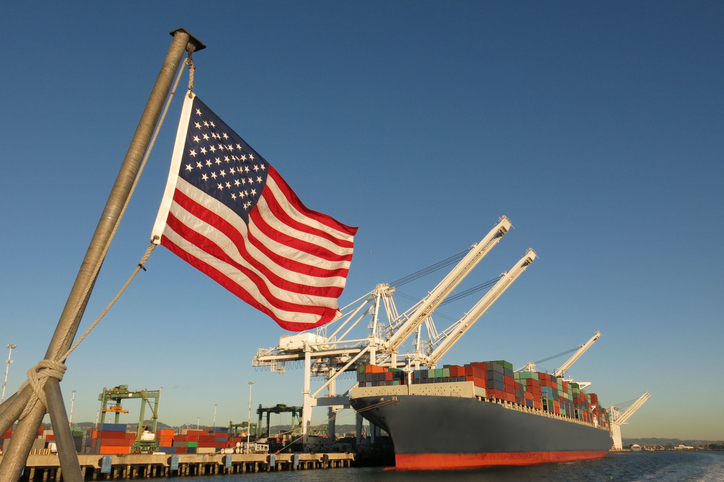
Turbulent would be a generous adjective to describe the international trade landscape this year. Yet this generational shift in U.S. trade policy did not form out of thin air. It is a culmination—and an ongoing churn—that was in the making at the onset of the first Trump administration, the lead up to his election, and, frankly, the decades preceding that moment.
The fog of uncertainty remains, and may not fully clear for the foreseeable future, but the contours of U.S. priorities in this new trading system have emerged. Today, it is no longer appropriate to stand under the banners of “free trade” or “protectionism.” Rather, flexibility to pursue desirable trade terms that will achieve economic and national security goals, however disruptive to the existing multilateral trading system, has and will continue to take priority, not only for this White House but also for future U.S. administrations and other governments.
In response, retail leaders must continue to adjust their strategies as global norms are being rewritten daily. As the dust settles, retailers will have the opportunity to engage and shape what this next chapter looks like.
As economic security continues to be fused with national security, building the U.S. industrial base and reindustrializing the U.S. economy will drive President Trump’s trade agenda for the next three years. This explains the administration’s use of tariffs, including through Section 232 investigations on steel and aluminum products, Section 301 investigations to target unfair trade practices, and “reciprocal” tariffs under IEEPA to address trade deficits and fentanyl trafficking. This also explains completed and ongoing trade negotiations with countries and the “tiering” of priority regions.
The National Security Strategy, which the White House released on December 4, describes the administration’s “America First” foreign policy and codifies this tiered view of the world. Trade and economic security features prominently throughout the document, and it will inform the President’s Trade Policy Agenda in the spring.
First, the administration aims to build a figurative “Fortress America,” a tariff and economic wall in the Western Hemisphere to align our closest neighbors with U.S. objectives. This was evidenced in the recent trade agreements with Argentina, Ecuador, El Salvador, and Guatemala. The latter two provide tariff exemptions for CAFTA-DR-qualifying goods, which RILA advocated for and is an acknowledgment of the need to preserve supply chain interoperability in our hemisphere for certain sectors. The joint review of the U.S. – Mexico – Canada Agreement and the ongoing bilateral negotiations with Mexico and Canada will serve this purpose.
As RILA testified before the Office of the U.S. Trade Representative, the USMCA and its rules of origin have been a bedrock of retailers’ success. While it is unclear how the agreement will change (see what U.S. Trade Representative Greer had to say about the USMCA), U.S relations with Mexico and Canada will continue to play a central part in fortifying this tier, along with our CAFTA-DR partners and Haiti, as we pressed for the renewal of Haiti’s trade preference programs. Retailers can lean into this, nearshoring integrated supply chains and production throughout the Western Hemisphere where possible.
Second, the administration is looking to a tier composed of U.S. allies in the Indo-Pacific. In exchange for enhanced cooperation on artificial intelligence, biotechnology, quantum computing, and capital market access, the United States will continue to demand trade policy alignment, export controls adoption, and trade rebalancing. We saw this in the trade agreements announced with Cambodia and Malaysia, and USTR is rushing to conclude talks with Vietnam, Thailand, Taiwan, and Indonesia. RILA’s advocacy has focused on making policymakers aware of the complexity of retail supply chains throughout this region and urging the need to “unstack” tariffs for consumer goods in light of the complexity.
RILA is also working with USTR and the White House to shape ongoing negotiations to, among other things, favor inputs from Southeast Asia as a key component to bolster U.S. manufacturing, a critical pillar for the administration. Relatedly, there will also be a window to engage the White House and Congress next year on retail leaders’ ability to provide quality, safe, and affordable goods to working families in the United States. Our members’ sourcing strategies across the Indo-Pacific should be a centerpiece in the administration’s response to coming inflationary pressures, especially during a midterm election year. We are in rhythm with everyday Americans, and we will continue to advocate why the U.S trade agenda should support and empower retailers.
Notably, the European Union and the Middle East have taken back seats in the eyes of the administration. The administration is keen to work with “capable, reliable” states in sub-Saharan Africa on things like energy financing and critical minerals partnerships, but we have not seen a clear first step in that direction. Next year will bring more movement on this front, including on renewing the African Growth and Opportunity Act (AGOA), which RILA has strongly advocated for.
The United States is not alone. Other regions are also shifting their trade policies. Europe is continuing its attempt to build its “Fortress Europe” through tariffs and other measures. Mexico and Canada are doing their parts on this side of the Atlantic through tariffs on non-FTA parters and decreasing import quotas on steel and aluminum, respectively. Global trade has not slowed; rather, it is redirecting its currents to form new pools. Plurilateral dealmaking is not yet defunct, and we will continue to see trade negotiations among the EU, Mercosur (Argentina, Bolivia, Brazil, Paraguay, and Uruguay), and Asian economies, even with occasional roadblocks. But the pursuit of comprehensive FTAs, with maximum tariff liberalization at their core, will increasingly take a political and practical backseat to sectoral dealmaking. Whether it is critical minerals, semiconductors, or steel and aluminum, the next three years will be about kickstarting sectoral trade arrangements—identifying and negotiating with like-minded countries to secure advantageous terms for the United States, in competition with China.
No trading relationship has embodied turbulence like the U.S. – China relationship this year. Even with the U.S. – China trade arrangement, China will continue to present the greatest risk for retailers. The administration’s China strategy can be summed up as follows, quoting from the National Security Strategy: “pragmatic without being “pragmatist,” realistic without being “realist,” principled without being “idealistic,” muscular without being “hawkish,” and restrained without being “dovish.” In other words, it is transactional, which by nature presents unpredictability.
Indeed, “transactional” can also describe the current U.S. trade agenda. While this does pose a threat to a certain degree, it also presents an opportunity for retailers. Through COVID-19, retail leaders demonstrated and strengthened nimbleness and resilience over rigidity. This flexibility can serve as a strength. Retailers should review where their businesses fall within the administration’s priority tiers and adapt their operations to maximize favorable treatment within those tiers.
Regardless of how the U.S. Supreme Court rules on the administration’s use of IEEPA to impose tariffs, the administration will use other statutes to largely maintain its tariff architecture and broader trade agenda. Further, tariffs are politically sticky and will remain to an extent even in future administrations. This worldview was again affirmed in a recent U.S. communication at the World Trade Organization, arguing that without meaningful reform, the forum will become irrelevant, incapable of addressing pressing economic issues, including overcapacity, economic security, and supply chain resilience.
In this environment, retailers’ focus and messaging ought to be centered on how our interests align with the nation’s interests—that we are for the working consumer who enables our economic and national security.