



Press Release

RILA highlights DHS funding progress, retail crime legislation, penny circulation issues, and affordability politics shaping the retail agenda.
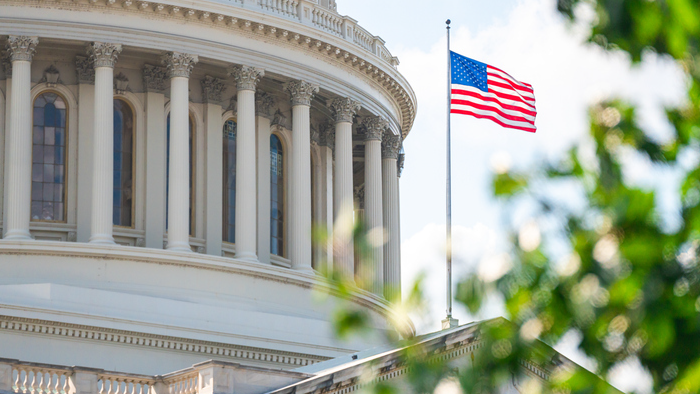
Last week, the House advanced several must-pass bills before leaving D.C. to return to their districts this week. The House approved the Senate bill funding for most of the Department of Homeland Security (DHS), functionally ending the longest shutdown in American history. Additionally, House Republicans moved the budget framework to fund ongoing operations for US Immigration and Customs Enforcement and Customs and Border Patrol (CBP) via the reconciliation process. Next steps will be for the House and Senate to formally begin drafting and passing the bill, which President Trump has said should be done by the end of May.
Notably, we are expecting the House to advance the Combatting Organized Retail Crime Act (CORCA) and send it to the Senate with a significant bipartisan vote.
While reconciliation unfolds, it provides breathing room through the spring and summer for other potential issues to get resolved. Congress will return next week for a busy Spring when several policies favored by retailers could see action. Notably, we are expecting the House to advance the Combatting Organized Retail Crime Act (CORCA) and send it to the Senate with a significant bipartisan vote. In addition, progress, albeit slowly, is being made on addressing penny circulation issues and compliance challenges related to rounding policies being driven by the states.
Looking ahead, the midterm campaign is intensifying. With each election, there is always a search by the out party – Democrats – to find issues to challenge the governing majority. This campaign season, the central issue continues to be prices and affordability. This push by Democrats reflects that the average voter is worried about the macro economy, the job market and financial stability. As a result, we are seeing growing populist risks coming to the retail industry ranging from public pressure on tariff refunds, variable pricing legislation and renewed bipartisan focus on labor rights. Each of these issues is primarily driven by the minority in Congress, which means they are less of a threat in 2026 than in 2027 when Democrats could take majorities in both the House and Senate. However, the RILA team has been actively working to engage on these topics with Capitol Hill in preparation for legislative activity both this year and going forward.
Log in to read the rest of our weekly newsletter as a benefit provided to RILA members.
Our government affairs experts track, analyze, and influence the policies impacting retailers—bringing you timely perspectives from Washington and beyond.

As Vice President of Technology Policy, Justin works to advance retailers’ policy agenda on Capitol Hill and the administration on issues such as data privacy and artificial intelligence. In addition, Justin also advocates on matters affecting competition and antitrust policy on behalf of RILA’s members.
Prior to RILA, Justin served as Senior Policy Advisor for Congressman A. Donald McEachin (D-VA) handling the congressman’s technology and telecommunications work on the House Energy and Commerce Committee. Before his time in Congress, Justin worked on several political campaigns, managing and fundraising for both congressional and state/local races.
Justin holds a B.A. and M.A. in political science from Virginia Tech and a J.D. from American University’s Washington College of Law.