




Press Release

House and Senate gridlock could slow action on penny rounding, organized retail crime, nominations, and must-pass bills.
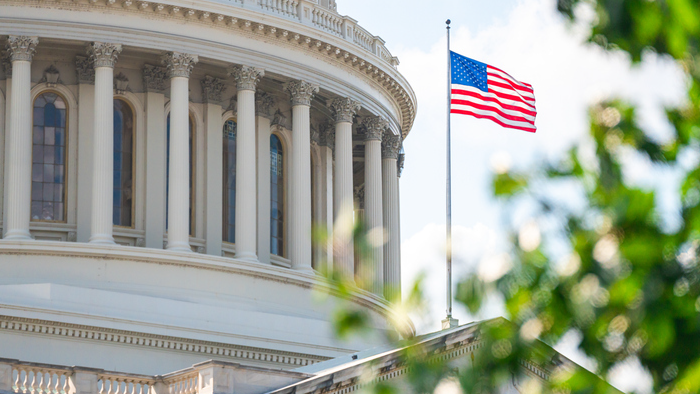
On Capitol Hill, the fireworks started early — and the political explosions are creating real consequences for the rest of the legislative year.
As July begins and the country looks ahead to America’s 250th anniversary celebrations, most are focused on cookouts, travel, and fireworks. On Capitol Hill, however, the fireworks started early—and the political explosions are creating real consequences for the rest of the legislative year. For retail government affairs teams, the immediate takeaway is clear: procedural gridlock in both chambers is narrowing the window to advance priority issues, including fixing penny-rounding challenges, moving the Combating Organized Retail Crime Act, and protecting must-pass legislative vehicles that often carry retail-relevant provisions.
In the House, a small bloc of hardline conservatives is preventing routine floor action by opposing procedural rules unless leadership agrees to more votes on election legislation like the SAVE Act. Because most major bills require a rule before reaching the floor, this tactic can halt not only partisan measures but also bipartisan or must-pass legislation such as appropriations bills and the National Defense Authorization Act. Speaker Johnson and President Trump are pressing conservatives to stand down, but the dispute remains unresolved. For retailers, the risk is that valuable floor time disappears, leaving fewer opportunities to attach or advance practical fixes on penny rounding and organized retail crime.
The Senate is facing a different but equally consequential challenge. Majority Leader Thune is trying to preserve a workable relationship with the White House while managing a Republican conference that is sensitive to midterm politics, foreign policy divisions, and pressure from conservative activists. Some Senate Republicans are showing less willingness to carry the President’s priorities without changes, and the resulting tension could slow nominations, appropriations, defense policy, and other vehicles that retail advocates rely on for movement. Specifically, we are watching whether the Senate can move a large bloc of nominations, including those for the National Labor Relations Board and U.S. Consumer Product Safety Commission, that will fulfill leadership roles at key department and agencies that are focused on major policies related to retail operations. Without a broader understanding between Senate leadership and the White House, even broadly supported retail priorities could be delayed by unrelated disputes.
Democrats have their own emerging electoral divisions between progressives, Democratic Socialists, and moderates, but for now they are staying unified and allowing Republicans to struggle with internal disagreements. That dynamic matters because July may be one of the last meaningful windows before the midterms further harden positions and consume floor time. Retail government affairs professionals should treat the coming session as a compressed advocacy sprint: identify the few legislative vehicles still likely to move, reinforce bipartisan support for retail priorities, and prepare contingency plans if Congress shifts from legislating to messaging. If leadership can restore basic floor functionality, retailers still have a path to secure targeted wins before year-end; if not, the agenda will become more defensive, focused on preserving existing gains and positioning for the next Congress.
Log in to read the rest of our weekly newsletter as a benefit provided to RILA members.
Our government affairs experts track, analyze, and influence the policies impacting retailers—bringing you timely perspectives from Washington and beyond.

As Vice President of Technology Policy, Justin works to advance retailers’ policy agenda on Capitol Hill and the administration on issues such as data privacy and artificial intelligence. In addition, Justin also advocates on matters affecting competition and antitrust policy on behalf of RILA’s members.
Prior to RILA, Justin served as Senior Policy Advisor for Congressman A. Donald McEachin (D-VA) handling the congressman’s technology and telecommunications work on the House Energy and Commerce Committee. Before his time in Congress, Justin worked on several political campaigns, managing and fundraising for both congressional and state/local races.
Justin holds a B.A. and M.A. in political science from Virginia Tech and a J.D. from American University’s Washington College of Law.