Blog Post

Congress has begun to recognize the scale of the challenge and the need for a federal response.

Organized retail crime (ORC) has evolved far beyond isolated incidents of theft. Today, it is driven by sophisticated, interstate criminal networks that coordinate thefts across jurisdictions, rapidly reselling stolen goods and exploiting gaps in enforcement. These crimes affect retailers of all sizes, put employees and customers at risk, and disrupt communities nationwide.
Congress has begun to recognize the scale of the challenge and the need for a federal response.
Modern ORC operations function much like other forms of organized crime. Networks deploy theft crews across multiple states, move merchandise quickly to avoid detection, and rely on inconsistent enforcement to continue operating.
While retailers invest heavily in prevention and local law enforcement plays a critical role in responding to incidents, these efforts alone cannot dismantle organized, interstate criminal enterprises. Criminal networks deliberately exploit jurisdictional boundaries, making coordinated federal involvement essential to disrupt their operations.
Federal law enforcement has the authority and reach needed to pursue coordinated, multi‑state investigations. These tools allow investigators and prosecutors to focus not only on individual theft incidents, but also on the organizers, resellers, and financiers who drive and profit from these crimes.
Absent a coordinated federal approach, investigations can be limited by jurisdictional boundaries, reducing their ability to disrupt broader criminal networks. Strong federal coordination helps ensure enforcement efforts reach beyond individual incidents and address the organized structures behind them. Once the structures are exposed and held accountable, the operations will crumble and communities and retail stores will be safer.
The Combating Organized Retail Crime Act is designed to strengthen the federal response by improving coordination, enforcement, and accountability. The legislation enhances tools for investigating organized retail theft networks, supports better information sharing among law enforcement agencies, and reinforces the federal government’s role in pursuing large‑scale, interstate criminal operations.
By focusing on organized activity rather than isolated thefts, the bill helps law enforcement target the individuals and networks that coordinate, finance, and profit from these crimes—particularly those operating across state lines.
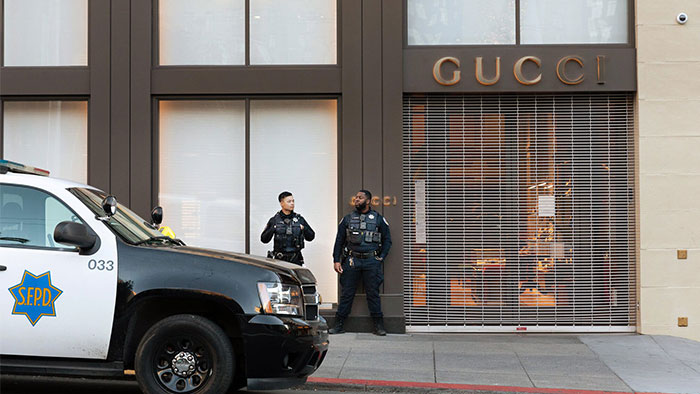
Organized retail crime is not victimless. Retail employees increasingly face coordinated theft events that involve intimidation and, in some cases, violence. These incidents threaten worker safety, erode community trust, and place burdens on local law enforcement.
Disrupting criminal networks at their source helps reduce repeat offenses and improves safety for workers, customers, and neighborhoods alike. A strong federal role is essential to advancing those outcomes.
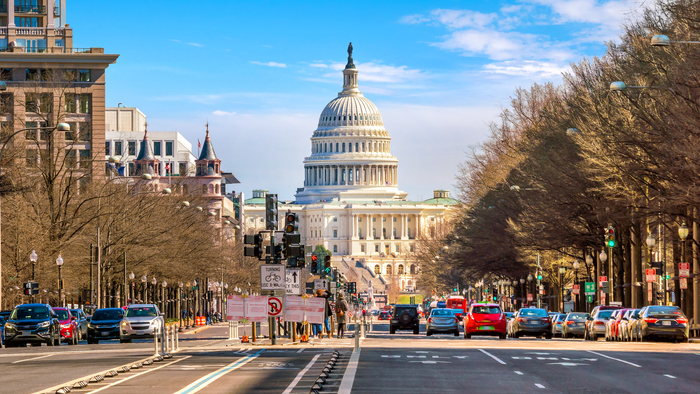
Momentum is building on Capitol Hill to address organized retail crime in a more comprehensive way. The Combating Organized Retail Crime Act reflects broad bipartisan recognition that organized retail crime is a serious and growing problem requiring federal engagement.
Importantly, the legislation was unanimously voted out of the House Judiciary Committee, underscoring strong agreement across party lines on the need to act. That vote sends a clear signal that lawmakers understand the economic, safety, and community impacts of organized retail crime — and the need for federal leadership.
Organized retail crime cannot be solved at the store level alone. Its interstate, organized nature demands a coordinated federal approach that matches the sophistication of the criminal networks involved.
The Combating Organized Retail Crime Act represents an important step toward that goal. Its unanimous advancement from committee reflects growing bipartisan consensus that federal leadership is essential to curbing organized retail crime and restoring accountability.
Sustaining this momentum will be critical to protecting workers, supporting retailers, and keeping communities safe. RILA urges Congress to build on this progress and pass the Combating Organized Retail Crime Act to ensure federal law enforcement has the tools needed to effectively combat organized retail crime.
Organized retail crime is one of the many asset protection challenges that will be front and center at RILA’s upcoming Retail Asset Protection Conference. April 19–22 in Phoenix, Arizona. This conference brings together retailers, law enforcement, prosecutors, and solution providers to tackle today’s most urgent threats and identify opportunities for collaboration and progress. We are proud to have Auror as the title sponsor of this year’s event, in addition to leading a session focused on their smart approach retail crime. Learn more about Auror here and make plans to join us here.
Sponsored by: