Retail Extended Producer Responsibility

Overview of extended producer responsibility frameworks, retailer roles, and policy approaches affecting product and packaging lifecycle management.

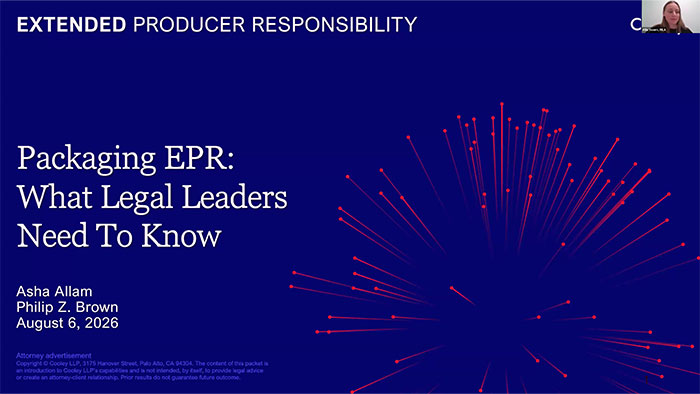
Extended Producer Responsibility (EPR) is an important policy tool for managing and reducing the increasing amount of consumer waste from products, packaging, and printing paper. As the term suggests, the EPR concept holds product manufacturers and distributors (i.e., producers) responsible for these products and materials at the end of life. For retailers, this comes into play when they have private brands. In addition, when a producer doesn’t operate in a jurisdiction, responsibility often falls to the importer, who may also be the retailer.  

EPR is intended to incentivize producers to prevent waste at the source, promote more circular design, and establish public-private partnerships to help address waste program challenges by embedding the cost of end-of-life management into the item's upfront cost. Typically, EPR laws require product manufacturers and distributors to establish a producer responsibility organization (PRO) that manages producer fees to support product take-back, educates consumers on their responsibilities, and meets EPR targets and goals. The program fees paid by producers can vary based on the EPR program, but may come in the form of: 

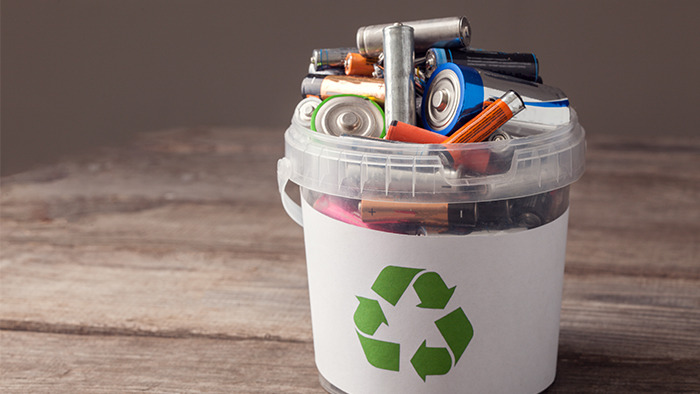
  1. A flat fee, meaning a fixed charge applied to all forms regardless of their attributes (e.g., lower-impact materials like recycled content, higher recyclability, etc.). This is the least common structure for packaging and paper EPR legislation, but is more common for product (mattress, batteries, e-waste, etc) EPR, since there is typically low variation in attributes. 
  2. An eco-modulated fee, meaning fees would be lower for packaging or products with positive environmental attributes (e.g., recycled content and/or higher recyclability) and higher for packaging or products with negative environmental attributes (e.g., low recyclability and/or recycling rates). This is what we see most U.S. states propose for packaging and paper EPR, and increasingly the go-to model in Europe, but given that the four enacted programs in the U.S. have yet to be implemented, evidence from this approach will not be known for several years. 
  3. A fee based on market infrastructure, where fees would be determined by a weight-based (cents per pound), per-material methodology based on the real collection and processing cost of respective materials to the jurisdiction’s recycling system. Some packaging and paper EPR programs in Canada use this model.  

This page highlights existing and potential EPR types for different materials in the US, including potential retailer responsibilities and associated resources. 

Retailers-House-Support-Tax-Policy-700x394.jpg
SPC’s Guide to EPR Proposals

Introduction to the Guide for EPR Proposals

Make sense of packaging EPR bills by breaking down key elements of the proposed policy.

Packaging and Paper 

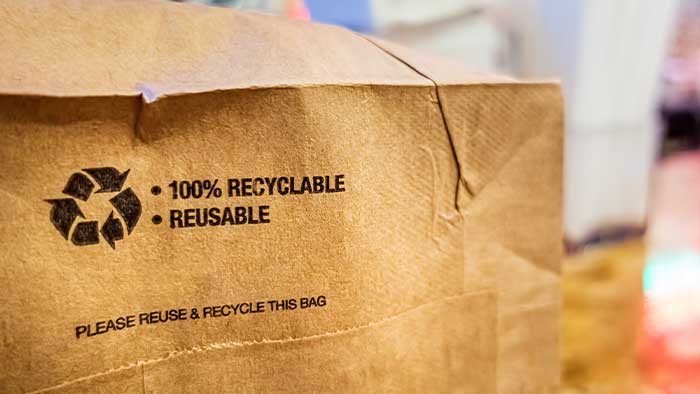
California, Colorado, Maine, and Oregon have all enacted EPR legislation for packaging and printing paper. As of April 2023, EPR bills are being considered in over 15 states. These bills establish EPR program requirements for producers of packaging materials sold, offered for sale, or distributed in the respective state, including through online transactions. Many of the bills under consideration include printed paper and/or paper products, while some also include a range of single-use products such as straws, utensils, cups, plates, and plastic bags. In most bills, producers are also required to join a PRO and pay a fee to the PRO to support collection, education, and the implementation of EPR goals. For more information on retailer responsibilities and fees, as well as the implementation timeline for states with passed packaging and printing EPR, click here. For a detailed list of recently introduced EPR packaging legislation and their varying components, visit SPC's Guide to EPR Proposal.

RILA Engagement 

As packaging EPR legislation takes shape in numerous states, RILA continues to engage with members, stakeholders, and other trade organizations to ensure the impact on retail is considered and to avoid unintended consequences stemming from a patchwork of laws around the country. To date, RILA has engaged with The Recycling Partnership’s Policy AcceleratorRecycling Infrastructure Now Coalition (RIN), Recycling Leadership CouncilRetail Council of Canada, and several State Retail Associations (SRAs). RILA also created a member Waste Policy Group to review packaging EPR policies and determine key industry considerations as needed (please reach out to Susan Kirsch if your company would like to engage). 

Several of RILA’s member committees (i.e., Consumer Products Committee, Environmental Advocacy Committee, Environmental Compliance Network, Sustainability Committee, and Zero Waste Network) also regularly discuss and benchmark around the implementation and retailer impact of EPR on calls and via webinars. Reach out to us to learn more about past discussions and webinars.  

Resources 

RILA developed a Retail EPR Viewpoint that summarizes key industry considerations for product packaging fee policies. RILA retail members can contact Susan Kirsch to request a copy of the document. 

Several organizations have developed their own frameworks or industry perspectives on packaging EPR. Below is a list of current organizations working on this topic. Viewpoints in these documents do not necessarily reflect those of RILA or its individual members and should be viewed for informational purposes only. 

E-waste

Twenty-five states have enacted legislation mandating e-waste recycling. All laws except those in California and Utah use the Producer Responsibility approach, where manufacturers must pay for recycling. In California, an advance recovery fee is in place, meaning consumers pay a nonrefundable recycling fee at the time of purchase for electronics. In Utah, the state has passed a manufacturer education law requiring manufacturers to implement a collection, reuse, or recycling system for electronics from Utah consumers. 

Paint

Ten states, including Colorado, Oregon, Minnesota, and the District of Columbia, have enacted paint EPR laws. These laws require paint companies to develop and manage paint stewardship programs, make it easy for consumers to recycle unused paint, and relieve much of local governments’ financial burden. Under paint EPR laws, consumers pay a small “eco fee” for recycling when they purchase new paint. An industry-run non-profit, PaintCare, uses this sustainable funding to manage the leftover paint.  Carpet

Currently, California is the only state that has an EPR law for carpet. Under this law, carpet manufacturers (either individually or through their stewardship organizations) design and implement their own stewardship programs, which are funded by a visible fee that consumers pay at the point of sale. More states have introduced carpet EPR legislation, including Minnesota, New York, and Oregon.

Mattresses

California, Connecticut, Oregon, and Rhode Island currently have EPR laws for mattresses. These laws require mattress manufacturers to provide consumers with an easier way to dispose of old mattresses. Producers pay into a stewardship organization to increase the collection and recycling of mattresses. The industry created the Mattress Recycling Council to help operate programs in states with these laws. Other states, such as Massachusetts, Minnesota, and Oregon, have recently introduced mattress EPR legislation.

Textiles

Currently, there are no EPR laws for textiles in the U.S. Some cities, like New York City, have expanded residential textile recycling programs and provide drop-off bins and locations for residents.

Looking abroad, France has enacted the first textiles EPR law, and programs are under consideration in Sweden and the Netherlands. In France, the companies are responsible for providing or managing the recycling of their clothing, home textiles, and footwear at the end of life. Companies that produce and/or sell these textiles can create their own stewardship organization or pay into Eco TLC to help manage their textiles. Fees are considered eco-modulated, so the more environmentally sustainable an item is, the lower its contribution. Smaller companies that meet certain requirements can pay a flat rate per year.

A Global Lens

The term EPR originated in the European Union (EU), which has a long history of EPR programs. The EU has EPR systems in place for packaging and goods such as electronics, batteries, and cars. In recent years, the EU has pushed for eco-modulation, tying manufacturers' costs for EPR programs to recyclability or recycled content in packaging. This push aims to help reach the EU’s goal of making 70% of packaging recyclable by 2030. The EU is looking to harmonize rules that vary within its member countries and maximize the impact of EPR, including eco-modulated fees, to help boost efforts to reach this packaging goal. Many non-governmental organizations are promoting and/or researching EPR-related solutions. Leading European-based organizations, including the Ellen MacArthur Foundation and the Consumer Goods Forum, have developed numerous resources laying out criteria for an optimal EPR program.

Canada also has EPR systems in place for certain products such as batteries, electronics, beverage containers, paint, and, recently, paper and packaging. Unlike the EU, Canada combined printer paper and packaging into a single EPR system, as incorporating paper often leads to higher recovery rates. Five provinces in Canada currently have paper and packaging programs that are funded through EPR. The Retail Council of Canada and UL published a 2021 white paper on packaging EPR that provides a retailer's perspective on EPR implementation in Canada.

Interested in learning more? Reach out to Susan Kirsch to learn how RILA is facilitating retail industry discussions and engaging key stakeholders around EPR.

Disclaimer: Viewpoints in linked documents or pages do not necessarily reflect those of RILA and should be viewed for informational purposes only. The information above is intended as a reference tool and is not an exhaustive list of all EPR legislative activity in the U.S. The information provides a summary and does not convey all aspects of legislated requirements. Links to legislation are accurate as of the date of this publication. Retailers should consult official agency resources and/or relevant legislative documents for comprehensive guidance. Inclusion of introduced legislation is not a predictor or an indicator of RILA’s belief that it will pass.


Join the Leaders Shaping the Future of Retail

RILA convenes the nation’s leading retailers to tackle industry challenges, influence public policy, and drive innovation across the retail industry. Members gain access to exclusive insights, influential advocacy, and a powerful network of retail decision-makers.